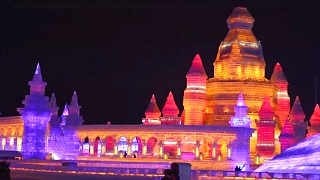
The Harbin 哈尔滨 Snow and Ice Festival 2019

[640],shadow=true,start=,stop=
[320],shadow=true,start=,stop=

Harbin, located in the northeastern part of China's Heilongjiang province, is known for its bitterly cold winters, Russian-influenced architecture, and the world-famous Harbin International Ice and Snow Sculpture Festival. Here's a guide for tourists visiting Harbin:

Ice and Snow Sculpture Festival:
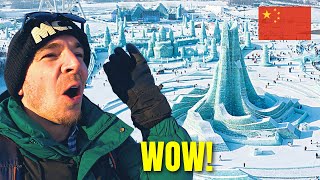
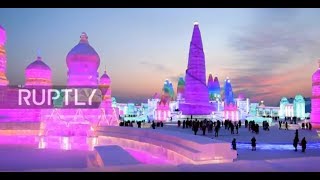
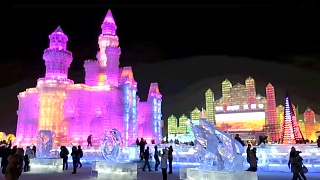
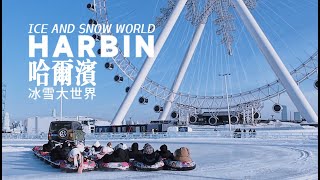
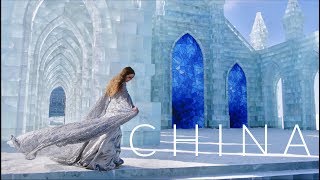
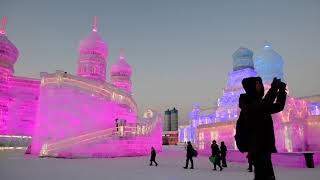
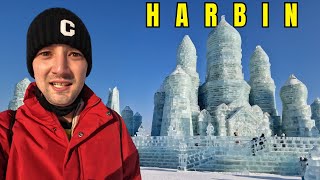
Harbin Ice and Snow World: This massive winter wonderland features elaborate ice and snow sculptures, illuminated by colorful lights. Visitors can marvel at ice castles, sculptures of famous landmarks, and intricate ice carvings.

Sun Island International Snow Sculpture Art Expo: Located on Sun Island in the Songhua River, this exhibition showcases large-scale snow sculptures created by artists from around the world.

Ice Lantern Festival: Held in Zhaolin Park, the Ice Lantern Festival features stunning ice lanterns, sculptures, and ice slides. Visitors can also enjoy cultural performances, fireworks, and traditional activities like ice fishing.

Russian Influence:
Central Avenue (Zhongyang Street): This pedestrian street is lined with European-style buildings dating back to the early 20th century, reflecting Harbin's history as a Russian trading outpost. Visitors can explore shops, cafes, and restaurants housed in these historic buildings.

St. Sophia Cathedral: This iconic landmark is one of the largest Orthodox churches in China. Built in the Russian Byzantine style, the cathedral now serves as a museum showcasing Harbin's multicultural history.

Cultural Attractions:
Harbin Confucian Temple: This ancient temple complex dates back to the Qing Dynasty and is dedicated to the philosopher Confucius. Visitors can explore traditional Chinese architecture, gardens, and historic artifacts.

Harbin Snow Sculpture Art Expo: Held in Sun Island Scenic Area during the winter months, this exhibition features intricate snow sculptures created by talented artists from around the world.

Modern Attractions:
Harbin Polarland: This theme park offers the opportunity to see a variety of Arctic animals up close, including polar bears, beluga whales, and Arctic foxes. Visitors can also enjoy animal performances and interactive exhibits.

Siberian Tiger Park: Located on the outskirts of Harbin, this wildlife park is home to over 500 Siberian tigers, as well as other exotic animals such as lions, leopards, and lynxes. Visitors can take guided tours and observe the animals from a safe distance.

Practical Tips:
Weather: Harbin experiences extremely cold winters, with temperatures often dropping below freezing. Visitors should dress warmly and be prepared for snow and icy conditions.

Transportation: Harbin has an extensive public transportation system, including buses and trams, as well as taxis and ride-hailing services. The city is also served by Harbin Taiping International Airport.

Language: Mandarin Chinese is the official language, but English may not be widely spoken outside of tourist areas. It's helpful to learn a few basic phrases or carry a translation app.

Harbin's unique blend of Russian and Chinese influences, coupled with its spectacular winter festivities, makes it a captivating destination for tourists. Whether you're marveling at ice sculptures, exploring historic landmarks, or experiencing the city's cultural heritage, Harbin offers a memorable and immersive travel experience.
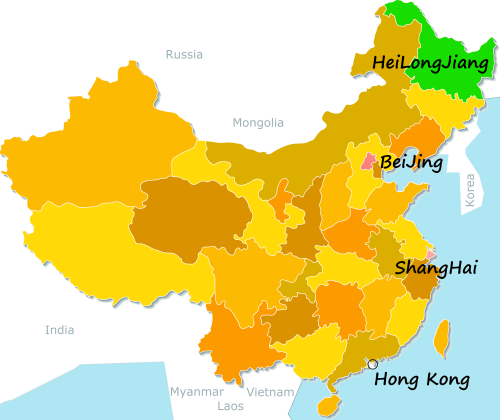
HeiLongJiang map

Related Videos


Featured Videos

ZhaoXing Dong Village, GuiZhou
With Walk East ... Bonus film - with NuMuves ...
The BeiJing Winter Olympics 2022 closing ceremony
In full ... Bonus film - the closing ceremony, 2008 ...
China in numbers (2020)
1. 1.4 billion - China's population, making it the most populous country in the world. 2. 23 - The number of provinces in China. 3. 56 - The number of recognized ethnic groups in China. 4. 9,596,960 square kilometers - China's total land area. 5. 1949 - The year the People's Republic of China was founded. 6. 70 - The percentage of the world's total silk production that comes from China. 7. 2,000 - The approximate number of years the Great Wall of China has been in existence. 8. 1971 - The year when China was admitted to the United Nations. 9. 34 - The number of UNESCO World Heritage Sites in China. 10. 4,000 - The years of recorded history in China. 11. 3.7 million square kilometers - The area covered by China's desert, the Gobi Desert. 12. 88 - The number considered lucky in Chinese culture. 13. 40,000 - The length of China's high-speed railway network in kilometers. 14. 1.4 trillion - The approximate number of disposable chopsticks used in China each year. 15. 4 - The number of official Chinese characters on the national flag. 16. 2nd - China's rank in the world for the largest economy. 17. 2008 - The year Beijing hosted the Summer Olympics. 18. 7 - The number of consecutive years China has been the world's largest exporter. 19. 1.4 billion - The number of mobile phone users in China. 20. 60 million - The approximate number of empty homes in China. 21. 40,000 - The approximate number of characters in the Chinese language. 22. 1,411 meters - The height of the Shanghai Tower, the second-tallest building in the world. 23. 8.98 million - The size, in square kilometers, of the Tibetan Plateau, often called the "Roof of the World." 24. 800 million - The number of internet users in China. 25. 50,000 - The number of rivers in China, each with a basin exceeding 100 square kilometers. 26. 300 million - The number of Chinese people practicing Buddhism. 27. 20 million - The number of Chinese Muslims. 28. 64 - The average life expectancy in China. 29. 45 - The percentage of China's population living in urban areas. 30. 1.39 billion - The number of active social media users in China. 31. 7,546 - The length, in kilometers, of the Grand Canal, the world's longest artificial waterway. 32. 15 million - The number of babies born in China each year. 33. 37 - The number of UNESCO Intangible Cultural Heritage items in China. 34. 2003 - The year China became the third country to launch a manned space mission. 35. 2.3 million - The size, in square kilometers, of the Taklamakan Desert, China's largest desert. 36. 12,000 - The number of terracotta warriors buried with China's first emperor, Qin Shi Huang. 37. 520 - A term in Chinese internet culture representing "I love you." 38. 100 million - The number of tourists who visit the Great Wall of China annually. 39. 2 - The number of pandas given as gifts by China to foreign countries as goodwill ambassadors. 40. 65 - The percentage of the world's total production of solar panels that comes from China. 41. 2,300 - The length, in kilometers, of the Yangtze River, China's longest river. 42. 1 - The number of children per couple allowed under China's one-child policy (recently replaced by a two-child policy). 43. 7 - The number of Chinese astronauts who have been in space. 44. 200 million - The number of bicycles in China. 45. 5,000 - The number of years tea has been consumed in China. 46. 300 - The number of TV channels in China. 47. 1.1 billion - The number of Chinese people who watch the annual CCTV Spring Festival Gala. 48. 221 BC - The year Qin Shi Huang unified China and became the first emperor. 49. 4 million - The number of college graduates in China each year. 50. 5 - The number of autonomous regions in China. 51. 3,300 - The length, in kilometers, of the Yellow River, China's second-longest river. 52. 49 - The percentage of the world's total coal consumption that comes from China. 53. 16,000 - The length, in kilometers, of the Great Wall of China, including all of its branches. 54. 1949 - The year when the Chinese currency, the Renminbi (RMB), was introduced. 55. 2.5 million - The number of electric vehicles sold in China in 2020. 56. 2,200 - The length, in kilometers, of the Mekong River, which originates in China. 57. 22 - The number of provinces, regions, and municipalities directly under the central government. 58. 150 million - The number of square meters of new construction added daily in China. 59. 8,848 meters - The height of Mount Everest, which straddles the border between China and Nepal. 60. 1966-1976 - The years of the Cultural Revolution in China. 61. 80 - The percentage of the world's total rare earth elements produced by China. 62. 8 - The number of major Chinese cuisines, including Sichuan, Cantonese, and Shandong. 63. 1.4 billion - The number of people covered by China's national health insurance. 64. 2 - The number of sessions of the National People's Congress held each year. 65. 1980 - The year China implemented its one-child policy. 66. 7 - The number of national holidays in China. 67. 80 million - The number of people who visit the Forbidden City in Beijing annually. 68. 5 trillion - The total value, in U.S. dollars, of China's foreign exchange reserves. 69. 1,417 meters - The depth of the South China Sea, China's marginal sea. 70. 10 - The number of Renminbi (RMB) denominations, including the yuan and jiao. 71. 26 million - The number of university students in China. 72. 9 - The number of dragon's pearls on the Chinese national flag. 73. 1,100 - The number of Giant Pandas remaining in the wild. 74. 25 - The percentage of the world's total steel production that comes from China. 75. 3,300 - The number of characters in a standard Chinese dictionary. 76. 1978 - The year China began economic reforms under Deng Xiaoping. 77. 2 million - The number of people employed in the Chinese military, the largest in the world. 78. 40 - The percentage of global e-commerce transactions that take place in China. 79. 7.6 million - The length, in kilometers, of China's highway system. 80. 35 - The percentage of the world's total cotton production that comes from China. 81. 700 million - The number of Chinese people lifted out of poverty since economic reforms began. 82. 9,144 kilometers - The length of China's land borders. 83. 600 BC - The approximate date of the earliest recorded Chinese characters. 84. 10 - The number of years it took to build the Bird's Nest Stadium for the 2008 Olympics. 85. 20 - The percentage of the world's total energy consumption that comes from China. 86. 1971 - The year when ping pong diplomacy improved relations between China and the United States. 87. 2 - The number of pandas sent to the U.S. as a result of ping pong diplomacy. 88. 70 - The percentage of the world's total solar water heater capacity installed in China. 89. 2,213 meters - The height of Mount Lushan, China's most famous mountain. 90. 200 million - The number of Chinese tourists who travel abroad each year. 91. 1969 - The year China successfully tested its first nuclear bomb. 92. 2,000 - The number of years the Chinese have been drinking tea. 93. 4 million - The number of square kilometers of arable land in China. 94. 10 million - The number of university graduates in China each year. 95. 120 - The number of years the Qing Dynasty ruled China (1644-1912). 96. 30 - The number of world heritage sites in China. 97. 100 - The percentage of electric buses in Shenzhen, the first city in the world to achieve this. 98. 1949 - The year China adopted the "five-star" national flag. 99. 70 million - The number of Chinese households that play Mahjong regularly. 100. 80 - The percentage of global Bitcoin mining that takes place in China.
The beautiful WuYuan ancient town, JiangXi province
With JiangXi China ... WuYuan Ancient Town, located in JiangXi province, is a place of historical and cultural significance, known for its well-preserved architecture and picturesque scenery. The town is often referred to as a "living museum" of ancient Chinese culture, offering a glimpse into the country's rich historical past. Historical Significance Wuyuan Ancient Town has a history that dates back over a thousand years. It flourished during the Tang (618-907) and Song (960-1279) dynasties and continued to thrive through the Ming (1368-1644) and Qing (1644-1912) dynasties. The town's strategic location and prosperous agricultural economy contributed to its development as a cultural and commercial hub. Architecture The architecture of Wuyuan Ancient Town is a highlight, featuring traditional Chinese structures such as ancestral halls, temples, and residential buildings. These structures are characterized by their intricate woodwork, stone carvings, and tile-roofed houses. The well-preserved buildings reflect the elegance and craftsmanship of ancient Chinese architectural styles. Natural Beauty Wuyuan is also renowned for its stunning natural landscapes. The town is surrounded by lush mountains, winding rivers, and terraced fields, creating a picturesque setting that changes with the seasons. In spring, the blooming canola flowers turn the fields into a sea of yellow, attracting photographers and nature enthusiasts from all over the country. Culture and Traditions Wuyuan Ancient Town is rich in cultural heritage and traditions. The local customs, festivals, and folk arts are well-preserved, offering visitors a chance to experience traditional Chinese culture firsthand. The town hosts various cultural events, including lantern festivals, dragon boat races, and traditional opera performances. Notable Sites Some of the notable sites in Wuyuan Ancient Town include: Likeng Village: Known for its beautiful ancient buildings and tranquil environment, Likeng Village offers a glimpse into traditional rural life in China. Rainbow Bridge: A historic covered bridge that is one of the most iconic landmarks in Wuyuan, featuring unique wooden architecture. Xiaoqi Village: Famous for its ancient merchant houses and well-preserved cultural relics. Jiangwan Village: A historic village with a rich cultural heritage and traditional architecture. Tourism and Accessibility Wuyuan Ancient Town has become a popular tourist destination, attracting visitors with its historical charm and natural beauty. The town is easily accessible from major cities in Guangxi and neighboring provinces. Efforts have been made to preserve the town's cultural heritage while developing infrastructure to accommodate tourists.
US hegemony – in south and central America, and the encirclement / ‘containment’ of China
YT comment : "If America really does not want to contain China, why would they build so many military bases around China and constantly instigate chaos either in China or in the countries around it?" Geo-politics explained - don't miss it ... Bonus film - Cuba's Ambassador : 6 Decade-Long US Embargo is a Genocidal Policy! Plus, western subversion of Cuba, China, and more ...
ShangHai Christmas night market
MiuMiu, the guitar girl – finger style
Planning war on China – part 22
The mainstream media in the West is a key part of the 'defense' (offence) department - it's all about hegemony / imperialism. Disinformation is always the first act of war. These 'journalists' are simply sycophants of an elite that wants total control; they think they are a part of the 'winners'. Totally disgusting. With Daniel Dumbrill ... With The New Atlas ... With Living In China ... With the Moderate Rebels ... On Desmond Tutu, with Democracy Now ... (Ignoring the lack of understanding China, and the climate change hysteria) ... YT comment : China today is committed to being more green. Her programs on Solar, Wind and Hydro power is advanced. President Xi has compared clean waters and forests as the real gold. YT comment : China has sought hegemony; never colonized; even when it could easily have done so. China id all about trade and building, not conquest. The China threat - the threat of a good example. In China, the people are family. In the West, the people are livestock.
8 years in China – ‘why I love being here’
With Rafa Goes Around! ... Bonus films - With Cyrus Janssen ... With Neel in China ... With KING KWESI ...

Tag search ?