The supremacist US heads to war with China – don’t miss it

Unhinged hysteria in the US belies the truth that it is the US that is the aggressor.

It is the US that has a long history of war, and it is the US that has many hundreds of military bases all around the world. It has a military budget greater than all other countries combined.

While China has never in its history been an aggressor.

With Cyrus Jannsen, The Duran and Reporterfy Media ...

[640],shadow=true,start=,stop=
[320],shadow=true,start=,stop= [320],shadow=true,start=,stop= [320],shadow=true,start=,stop= [320],shadow=true,start=,stop= [320],shadow=true,start=,stop= [320],shadow=true,start=,stop=

Related Videos


Featured Videos

An introduction to China
With Nation Nibbles ... With BRIGHT SIDE ...
HaNi rice terraces, YuanYang, HongHe, YunNan province
With Little Chinese Everywhere ... The Hani rice terraces are a spectacular example of ancient agricultural engineering located in the Yuanyang County of Yunnan Province, China. These terraces are renowned for their beauty and cultural significance, as well as their sustainable farming practices that have been maintained for over a millennium. Historical and Cultural Background Origins and History The Hani people, an ethnic minority in China, began constructing these terraces around 1,300 years ago. They transformed the steep slopes of the Ailao Mountains into a series of stepped terraces, making the land suitable for rice cultivation. Cultural Significance The terraces are not just a testament to agricultural ingenuity but also a reflection of the Hani culture and their harmonious relationship with nature. The Hani people believe in a symbiotic relationship with their environment, which is reflected in their farming practices, spiritual beliefs, and festivals. Agricultural Practices Irrigation System A sophisticated irrigation system channels water from the forested mountaintops down through the terraces. This system ensures a stable water supply, critical for the cultivation of rice. Sustainability The Hani terraces are an example of sustainable farming, with practices that preserve soil fertility and biodiversity. Crop rotation and the use of natural fertilizers are integral parts of their agricultural methods. Natural and Scenic Beauty Visual Appeal The terraces are most visually striking during the planting season when the fields are filled with water, reflecting the sky and creating a mirror-like effect. During different seasons, the terraces change colors, ranging from the vibrant green of growing rice to the golden hues of the harvest season. Tourism The terraces attract tourists from around the world, especially photographers and nature enthusiasts. Key viewing points include Duoyishu, Bada, and Laohuzui, each offering breathtaking views of the terraces at different times of the day. UNESCO World Heritage Status Recognition In 2013, the Hani rice terraces were designated a UNESCO World Heritage Site. This recognition underscores their cultural and historical importance, as well as their unique agricultural landscape. Conservation Efforts Efforts are underway to preserve this heritage site, focusing on maintaining the traditional farming practices and protecting the environment from modern threats such as tourism pressure and climate change. Conclusion The Hani rice terraces are a remarkable blend of human ingenuity and natural beauty. They represent the Hani people's enduring relationship with their land, showcasing a sustainable agricultural system that has thrived for centuries. As both a cultural treasure and a stunning visual spectacle, the Hani rice terraces continue to captivate and inspire visitors from around the globe.
Night walk in FuZhou and XiaMen, FuJian province
With Walk East ...
Lavender Manor, NingXia
The beautiful Summer Palace 頤和園, BeiJing
Wonderful sweeping scenes ...
Beautiful scenes from the ‘Zen Music Shaolin Grand Ceremony’ 少林寺
Shaolin Temple is located near the base of SongShan Mountain near DengFeng in Henan province and is the cradle of ShaoLin Kung Fu Buddhist culture. The live show is located in DaiXian Valley, 7 kilometers from the ShaoLin Temple and ten kilometers south of DengFeng in ZhengZhou city. Performances: 20:00 - 21:15 between mid-March and mid-November. Awesome ...
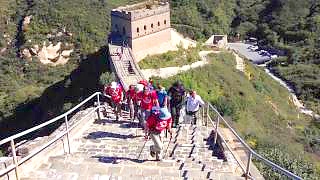
The Great Wall of China near BeiJing
BaDaLing and MuTianYu Great Wall (about 1+ hours from BeiJing city center) ... JinShanLing and SiMaTai Great Wall (about 2+ hours from BeiJing) ... Bonus films - Plus, Cindy Zhang shows us a hike along the rugged JianKou section of the Great Wall (it is not far from MuTianYu) ...
The beautiful ShaXi ancient town, YunNan province
Don't miss it ! With Panda Walking ...
The beautiful YuanYang  元阳 rice terraces, south YunNan province

Tag search ?