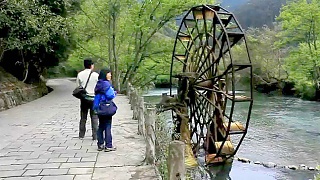
Around YangShuo 阳朔, GuangXi province

[640],shadow=true,start=,stop=
[320],shadow=true,start=,stop=[320],shadow=true,start=,stop=[320],shadow=true,start=,stop=[320],shadow=true,start=,stop=

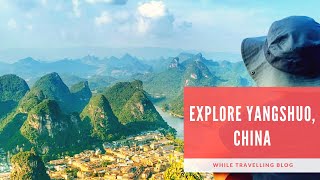
Yangshuo, situated in Guangxi Zhuang Autonomous Region in southern China, is renowned for its breathtaking karst landscapes, serene rivers, and vibrant local culture. Here's a guide for visitors to Yangshuo:

Natural Beauty:
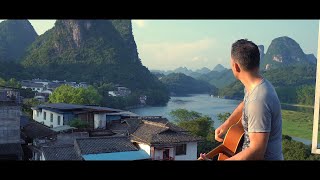
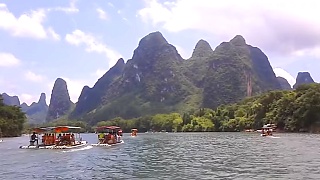
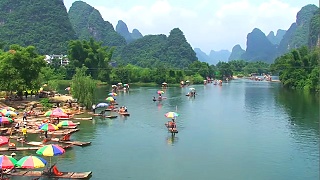
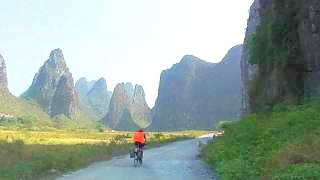
Karst Mountains: Yangshuo is famous for its iconic karst mountains, which rise sharply from the surrounding plains, creating a dramatic and picturesque landscape. Visitors can explore these unique limestone formations by hiking, biking, or taking boat cruises along the Li River.

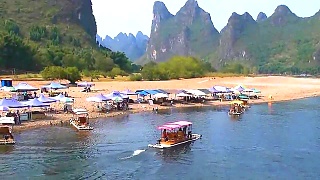
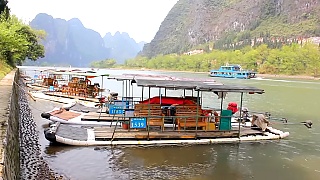
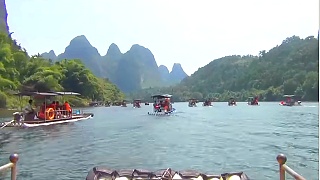
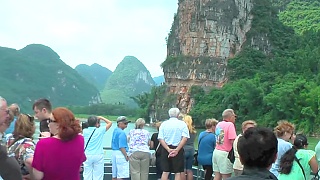
Li River: The Li River, one of China's most scenic waterways, meanders through the karst mountains of Yangshuo, offering stunning vistas at every turn. A leisurely boat cruise along the Li River is a must-do activity for visitors, providing opportunities to admire the breathtaking scenery and capture iconic views of the karst peaks reflected in the water.

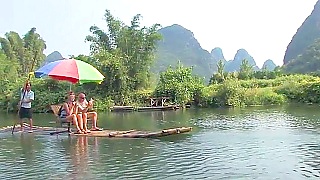
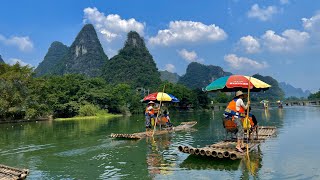
Yulong River: The Yulong River, a tributary of the Li River, is another picturesque waterway that flows through Yangshuo's countryside. Visitors can enjoy bamboo rafting or kayaking on the Yulong River, passing through idyllic villages, rice paddies, and bamboo groves along the way.

Outdoor Activities:
Cycling: Yangshuo is a cyclist's paradise, with scenic countryside roads and trails that wind through rice fields, orchards, and traditional villages. Renting a bicycle and exploring the surrounding countryside at a leisurely pace is a popular activity for visitors.

Rock Climbing: With its towering karst cliffs and limestone peaks, Yangshuo is a premier rock climbing destination in China. Experienced climbers and beginners alike can find suitable routes and climbing spots in the area, with options for guided tours and equipment rental available.

Cultural Experiences:
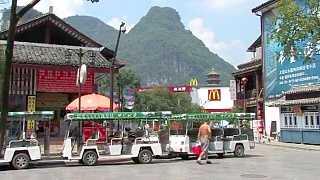
West Street: West Street (Xi Jie) is the main thoroughfare in Yangshuo's town center and a hub of activity for tourists and locals alike. Lined with shops, restaurants, cafes, and bars, West Street offers a vibrant atmosphere and is a great place to shop for souvenirs, sample local cuisine, and soak in the town's unique charm.

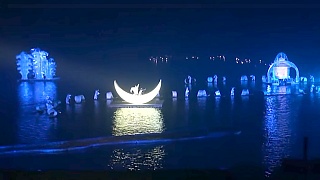
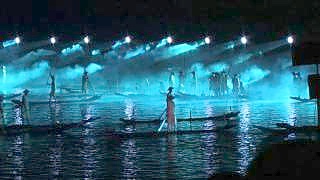
Impression Sanjie Liu: Directed by renowned filmmaker Zhang Yimou, Impression Sanjie Liu is a spectacular outdoor performance staged on the Li River. Featuring a cast of hundreds of performers, including local fishermen and farmers, the show combines music, dance, and light effects to showcase the natural beauty and cultural heritage of the area.

Practical Tips:
Weather: Yangshuo has a subtropical climate with mild winters and hot, humid summers. The best time to visit is during the spring (March to May) and autumn (September to November) when the weather is most pleasant and the landscapes are lush and green.

Accommodation: Yangshuo offers a range of accommodation options, including guesthouses, boutique hotels, and hostels catering to various budgets and preferences. Staying in the town center allows visitors to easily access attractions, restaurants, and transportation options.

Local Cuisine: Don't miss the opportunity to sample Yangshuo's delicious local cuisine, which includes specialties such as beer fish and Guilin rice noodles. Many restaurants in Yangshuo offer outdoor seating with panoramic views of the surrounding karst landscape.

Yangshuo's stunning natural scenery, outdoor activities, and vibrant cultural scene make it a popular destination for travelers seeking to explore the beauty of southern China. Whether cruising along the Li River, cycling through the countryside, or immersing oneself in the town's bustling street life, Yangshuo offers unforgettable experiences for visitors of all ages and interests.
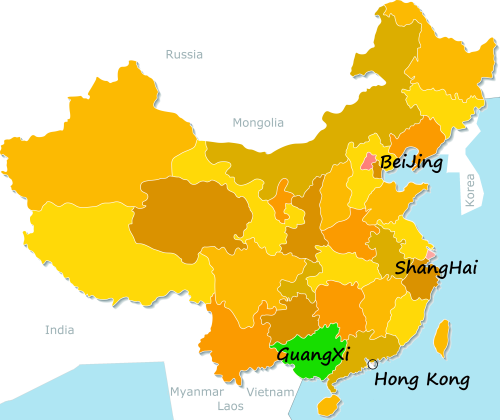
GuangXi map

Related Videos


Featured Videos

Movie time – Yesterday Once More 谁的青春不迷茫 Don’t miss it
It's better to be late than never ... Set in high school, a story of love and friendship. And, above all, honesty; especially being true, to oneself, and others. A truly awesome movie - don't miss it ! Really a lot in this film, no matter if you're way past school days. Builds and builds. And so many life lessons here; you will laugh, and you will cry ... A film about education, music, honesty, astronomy, divorce, cheating, friendship, class, imprisonment, growing up, love, bullying, finance, heartbreak, flight, bikers, radio, Romeo and Juliet, comedy, Beatles, and more. It's a film about - everything. A cast of 20 in a film you'll never forget; a true inspiration. The universe maybe huge, but our world is small. Life is a journey of laughter and tears. A YoYo Yao film ... Starring Bai JingTing, Guo ShuTong, Li HongYi, Wang HeRun, Ding GuanSen and Zhao WenLong. Directed by Yoyo Yao. What are your dreams for the future ?
Typical evening activity in China
All Chinese cities and towns re full of public spaces and parks that fill with dance and exercise and joy every evening ...
ChengDu city guide
Overview ChengDu (成都) is the capital city of SiChuan province in south-west China. Known for its spicy cuisine, relaxed lifestyle, and panda conservation centers, ChengDu offers a unique blend of modernity and tradition. Top Attractions Chengdu Research Base of Giant Panda Breeding (成都大熊猫繁育研究基地) - Chéngdū Dàxióngmāo Fányù Yánjiū Jīdì Jinli Ancient Street (锦里古街) - Jǐnlǐ Gǔjiē Wuhou Shrine (武侯祠) - Wǔhóu Cí Qingcheng Mountain (青城山) - Qīngchéng Shān Dujiangyan Irrigation System (都江堰) - Dūjiāngyàn Wide and Narrow Alleys (Kuanzhai Alley) (宽窄巷子) - Kuānzhǎi Xiàngzi Sichuan Opera and Face Changing Show (川剧变脸) - Chuānjù Biànliǎn Chengdu People's Park (成都人民公园) - Chéngdū Rénmín Gōngyuán Chunxi Road (春熙路) - Chūnxī Lù Song Xian Qiao Antique Market (宋庆龄故居松仙桥古玩市场) - Sòng Qìnglíng Gùjū Sōngxiānqiáo Gǔwàn Shìchǎng Wenshu Monastery (文殊院) - Wénshū Yuàn Mt. Emei (峨眉山) - Éméi Shān (Day trip from Chengdu) Dining Experiences Hot Pot (火锅) - Huǒguō Sichuan Cuisine (川菜) - Chuāncài Tea Houses (茶馆) - Cháguǎn Huangcheng Laoma (Old Master Huang's Restaurant) (黄城老妈) - Huángchéng Lǎomā Yulin Life Plaza Food Street (玉林生活广场美食街) - Yùlín Shēnghuó Guǎngchǎng Měishí Jiē Long Chaoshou Restaurant (Dragon's Wonton Restaurant) (龙抄手) - Lóng Chāoshǒu Shopping and Entertainment Chunxi Road Shopping District (春熙路购物区) - Chūnxī Lù Gòuwù Qū Taikoo Li (太古里) - Tàigǔlǐ IFS (International Finance Square) (国际金融中心) - Guójì Jīnróng Zhōngxīn Sichuan Opera and Tea Culture Show (川剧茶艺表演) - Chuānjù Cháyì Biǎoyǎn Chengdu Global Center (成都环球中心) - Chéngdū Huánqiú Zhōngxīn Chengdu IFS Ice Fountain (IFS冰雪奇缘) - IFS Bīngxuě Qíyuán Chengdu New Century Global Center (成都世纪环球中心) - Chéngdū Shìjì Huánqiú Zhōngxīn Tianfu New Area (天府新区) - Tiānfǔ Xīn Qū. Tianfu New Area is a rapidly developing region known for its modern architecture, innovative industries, and urban planning. Nightlife and Entertainment Wide and Narrow Alleys (Kuanzhai Alley) (宽窄巷子) - Kuānzhǎi Xiàngzi Jiuyanqiao Bar Street (九眼桥酒吧街) - Jiǔyǎnqiáo Jiǔbā Jiē Lan Kwai Fong Chengdu (成都兰桂坊) - Chéngdū Lánguìfāng Heming Teahouse (Hemingway Bar) (海明茶馆) - Hǎimíng Cháguǎn Chengdu Sino-Ocean Taikoo Li (成都远洋太古里) - Chéngdū Yuǎnyáng Tàigǔlǐ Practical Tips Transportation: Use the Chengdu metro system, buses, or taxis for getting around. Language: Mandarin is the primary language; learn some basic phrases. Weather: Chengdu has a mild climate, but prepare for occasional rain, especially in summer. Currency: Use local currency (Renminbi). Panda Visits: Plan your visit to the panda base early in the morning for the best panda viewing. Respect Local Customs: Embrace the laid-back lifestyle and tea culture of Chengdu. Hidden Gems Chengdu Culture Park (成都文化公园) - Chéngdū Wénhuà Gōngyuán Chengdu Panda Asian Food Festival (成都国际熊猫美食节) - Chéngdū Guójì Xióngmāo Měishí Jié Anshun Bridge Night Market (安顺廊桥夜市) - Ānshùn Lángqiáo Yèshì Enjoy exploring Chengdu's rich culture, delicious cuisine, and the adorable giant pandas!
In the footsteps of Marco Polo along the Silk Road and his many years in China
With TRACKS - Travel Documentaries ... The Travels of Marco Polo Introduction Marco Polo, the Venetian explorer, is renowned for his extensive travels along the Silk Road during the 13th century. His journey provided Europe with one of the earliest comprehensive glimpses of the East. This guide focuses on Marco Polo's travels, with a particular emphasis on his time in China and the significant experiences he documented in his book, "The Travels of Marco Polo." Early Journey Marco Polo embarked on his journey to Asia in 1271, at the age of 17, accompanied by his father, Niccolò, and his uncle, Maffeo Polo. The Polo family traveled overland through the Middle East, passing through regions such as Persia (modern-day Iran) and the Pamir Mountains, enduring harsh climates and difficult terrains. Their ultimate goal was to reach the court of Kublai Khan, the Mongol ruler of China. Arrival in China In 1275, after nearly four years of travel, Marco Polo and his family arrived at the court of Kublai Khan in Shangdu (Xanadu), present-day Inner Mongolia. Kublai Khan, impressed by their knowledge and skills, took a particular interest in Marco Polo, employing him as a diplomat and sending him on various missions throughout his empire. Marco Polo's Time in China Service to Kublai Khan Marco Polo served Kublai Khan for 17 years, undertaking diplomatic missions that allowed him to travel extensively across China and other parts of Asia. He became well-acquainted with the Mongol administration and the diverse cultures within the empire. His detailed observations and accounts provided valuable insights into the life and governance of the Mongol Empire. Explorations and Observations During his time in China, Marco Polo visited numerous cities and regions, documenting their unique aspects. Some key places he described include: Beijing (Khanbaliq): The capital of Kublai Khan's empire, Beijing was a bustling metropolis with grand palaces, markets, and administrative buildings. Marco Polo marveled at the city's size, organization, and the wealth displayed by its inhabitants. Hangzhou (Quinsai): Marco Polo described Hangzhou as one of the most magnificent cities in the world, renowned for its beautiful canals, thriving commerce, and vibrant culture. He noted its sophisticated infrastructure, including bridges, markets, and gardens. Suzhou and its Silk Production: Marco Polo provided detailed accounts of silk production in Suzhou, highlighting the meticulous process of harvesting silk from silkworms and weaving it into luxurious fabrics. He was fascinated by the craftsmanship and the high demand for silk across the empire. Yunnan Province: During his travels, Marco Polo ventured into Yunnan, describing its diverse ethnic groups and unique customs. He also noted the region's rich natural resources, including gold and other minerals. Tibet: Marco Polo's travels took him to the Tibetan Plateau, where he documented the distinctive culture, religious practices, and the high-altitude lifestyle of the Tibetan people. Technological and Cultural Observations Marco Polo's accounts also included descriptions of various technologies and cultural practices he encountered in China: Paper Money: Marco Polo was fascinated by the use of paper money, a novel concept to Europeans at the time. He described the process of printing and distributing paper currency, which facilitated trade across the vast empire. Postal System: The efficient postal system, known as the "Yam," impressed Marco Polo. This network of relay stations and couriers enabled swift communication and the transportation of goods and information across great distances. Innovations and Inventions: Marco Polo documented various Chinese inventions, such as gunpowder, printing, and the compass, which later had a profound impact on European technology and exploration. Cultural Exchange: Marco Polo's interactions with diverse cultures within the Mongol Empire enriched his understanding of different customs, religions, and lifestyles. His accounts reflect the multicultural nature of the Silk Road and the exchange of ideas and knowledge it facilitated. Return to Venice In 1292, after spending 17 years in China, Marco Polo and his family decided to return to Venice. They joined a Mongol princess's escort on her journey to Persia, eventually making their way back to Europe via the Indian Ocean and the Arabian Sea. They arrived in Venice in 1295, after 24 years of travel. Legacy of Marco Polo Marco Polo's detailed accounts of his travels were compiled into a book, "The Travels of Marco Polo," which became one of the most important sources of information about the East for Europeans. His descriptions of the wealth, culture, and innovations of China and other Asian regions inspired future explorers, including Christopher Columbus, and significantly influenced European knowledge and perceptions of Asia. Marco Polo's travels along the Silk Road highlighted the interconnectedness of the world through trade and cultural exchange, and his legacy continues to be celebrated as a testament to the spirit of exploration and curiosity.
ZhangJiang Science City, PuDong, ShangHai
With MiaoMiao ... Zhangjiang Science City, located in the Pudong district of Shanghai, is a major hub for scientific innovation and research in China. Often referred to as the "Silicon Valley of China," Zhangjiang Science City has been a focal point for the development of high-tech industries, particularly in the fields of biotechnology, information technology, and advanced manufacturing. Key Features and Developments: Research and Development Hub: Zhangjiang Science City hosts numerous research institutions, universities, and corporate R&D centers. It's home to the Zhangjiang National Innovation Demonstration Zone, which plays a critical role in fostering technological innovation. The area is known for its strong focus on life sciences, with many pharmaceutical companies and biotech firms operating there, including multinational corporations like Roche and Novartis. Tech Startups and Incubators: The region has a thriving startup ecosystem, supported by various incubators and accelerators. This makes it an attractive destination for tech entrepreneurs and innovators. The Shanghai Zhangjiang Hi-Tech Park, within the science city, is one of China's most prominent technology parks, providing resources and infrastructure for startups. International Collaboration: Zhangjiang Science City emphasizes international collaboration, with numerous foreign enterprises establishing their R&D centers there. The area facilitates joint ventures and partnerships between Chinese and global companies. The establishment of free trade zones and favorable policies has further encouraged international investment and collaboration. Smart City Development: As part of the broader Shanghai initiative, Zhangjiang is being developed into a "smart city" with advanced infrastructure for communications, transport, and urban living. The integration of AI, big data, and IoT technologies into the city’s infrastructure is a key aspect of its development, making it a model for future urban areas. Education and Talent: The science city benefits from proximity to top-tier universities and research institutions, which supply a steady stream of talent in various scientific and engineering disciplines. Efforts are made to attract and retain international talent, offering competitive incentives and a conducive environment for innovation. Government Support: The Chinese government has prioritized Zhangjiang as a key area for the country’s strategic technology development. Policies are in place to support research, attract investment, and encourage innovation. Significant investments have been made in infrastructure, including transport links that connect Zhangjiang to other parts of Shanghai and beyond, enhancing its accessibility and appeal as a business location. Future Prospects: Zhangjiang Science City is poised to continue its growth as a global leader in science and technology. With ongoing investments and a focus on high-tech industries, it is expected to play a significant role in China's ambitions to become a world leader in innovation and technology by the mid-21st century. The combination of government support, international collaboration, and a strong innovation ecosystem makes Zhangjiang Science City a critical component of Shanghai's, and indeed China's, future development strategy.
National Day, October 1st 2022, ShangHai walk
A day in ChengDu
SiChuan province ... Bonus films ...
The beautiful DuoYiHe River 多疑和河, LuoPing, YunNan province
Filmed in March 2011 ...
This is it. (philosophy)
Alan Watts talks about Zen Buddhism - why we should stop chasing our tail. Wu Wei - action without force ... The Middle Way - the path that cannot be followed, and The Fall (anxiety) ... The truth is soooooo simple, it is hard to put into words .. Audio book - The Way of Zen ...

Tag search ?